
|3.965Mins Read
How Predictive AI Tools Can Identify Invisible Risks for Businesses
- Authors

- Name
- Geeks Kai
- @KaiGeeks
https://www.pexels.com/photo/man-in-sunglasses-and-screen-5866051/
Humans are naturally risk-averse. We do whatever it takes, like investing time and resources, to ensure that everything is safe and predictable. This includes our surroundings, our finances, and our health.
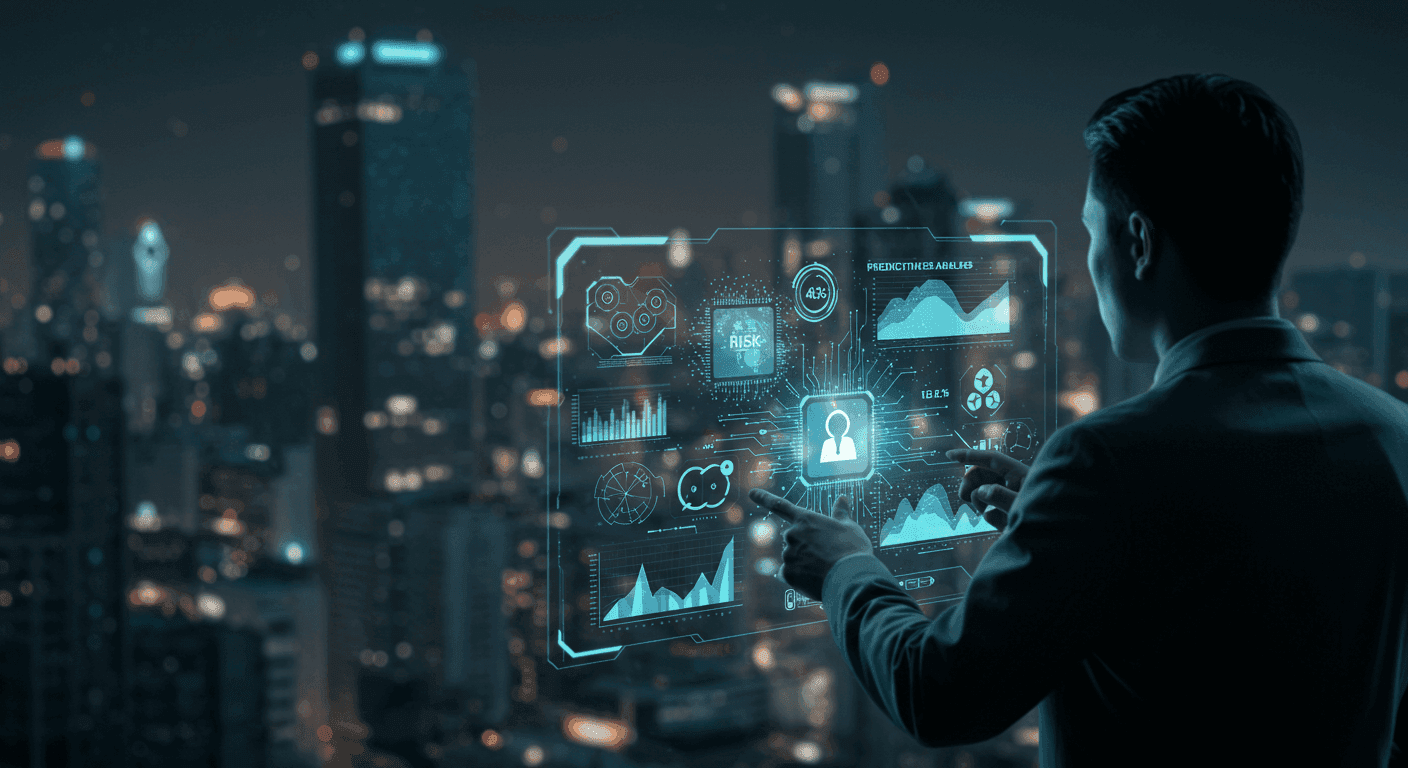
However, risks can hide in the systems people use every day, like a glitch in a banking app or a problem in a delivery service. Predictive artificial intelligence (AI) tools help businesses find these issues before they cause harm. This is one of the most important uses of AI.
They work by analyzing data to spot patterns, such as unusual transactions in finance or delays in logistics, that might lead to trouble. This blog post explores how these AI tools hunt down invisible risks, and protect from impending losses.
Since 2022, when artificial intelligence became mainstream, it has shown tremendous growth. A 2025 Statista report pins the global market size of AI to [28 billion by 2026, growing at an annual rate of 21.7 percent.
Predictive artificial intelligence feasts on data, diving into piles of it, bank transactions, shipment logs, and app error reports, to uncover risks nobody sees. It employs advanced techniques, such as anomaly detection, to identify unusual patterns, like a surge in failed logins that may indicate a hack.
Clustering groups similar issues, making trends stand out, while signal boosting lifts faint clues, like a few odd error logs that could mean big trouble. These tools blaze through data in seconds, way beyond human speed.
Take Amazon, for instance. The company has a product recommendation engine that is entirely based on analyzing browsing history and buying patterns. This predictive analysis is able to generate 35 percent of its revenue.
One of the most demonstrative ways that Predictive AI is proving its potential is by catching rare drug risks early. AI-powered healthcare companies attracted investments worth $7.2 billion in 2023, showing how lucrative the market is.
It can spot unexpected side effect spikes, thus preventing health complications for consumers. This has a lot of relevance in today’s tech-enabled healthcare, where patients are getting diagnosed using AI tools.
Take the recent lawsuit related to the risk of brain tumors caused by Depo Provera, an injectable contraceptive. On learning more about the chances of developing a brain tumor from Depo Provera claims, the manufacturer’s fault is clear. This is something that could have been prevented with predictive AI.
TorHoerman Law notes that the drug manufacturer failed to warn the patients about its risks. The complications were especially serious for long-term users, and that means more time could have been spent on research by the manufacturer.
The predictive AI tools act like a safety net, keeping systems steady and users safe.
Predictive AI is swift, but accuracy using the human element is its backbone. This human-artificial intelligence team blends speed with smarts, ensuring alerts are not just noise. Privacy is a big deal, too. Tools follow rules like GDPR or CCPA, locking data tightly with encryption. Developers earn trust by keeping things secure and open.
Models face constant stress tests, pitted against real-world risks to stay sharp. False flags, like mistaking a legit deal for fraud, waste time, so rigorous checks are everything.
By pairing artificial intelligence’s hustle with human judgment, these tools deliver insights that keep tech systems safe. The goal is simple: catch real risks without causing a fuss, protecting users across the board.
A 2024 PwC report reveals that 40 percent of companies have enhanced their risk management by using AI tools. However, creating artificial intelligence that spots risks is not just about clever code, but about building tools that treat everyone fairly.
These systems must share their reasoning in clear, everyday language, so developers and users understand exactly what is happening without feeling lost or confused.
Fairness is just as important. Artificial intelligence needs to draw from a wide range of data to ensure it does not overlook risks that affect smaller groups, such as users of niche apps or customers in less common markets.
Ethical artificial intelligence paves the way for technology that not only works well but also earns the trust of everyone it touches.
Predictive artificial intelligence is opening doors to a future where hidden risks are caught before they cause trouble, making technology systems more dependable. It does not take charge but quietly points out potential problems, much like a teammate who always has your back.
This teamwork promises a future where systems serve customers and businesses alike with care and confidence.