
|8.485Mins Read
Best EHS Software in 2026
- Authors

- Name
- Geeks Kai
- @KaiGeeks
Environment, Health, and Safety (EHS) software helps organizations manage the programs, records, workflows, and reporting needed to keep workers safe, maintain compliance, and reduce operational risk. Instead of relying on spreadsheets, paper forms, disconnected training records, or manual inspection binders, EHS platforms centralize core safety activities such as incident reporting, inspections, audits, corrective actions, training management, risk assessments, equipment tracking, and compliance documentation.
Modern businesses need systems that support field teams, automate administrative work, improve visibility across multiple sites, and help leaders make faster safety decisions. This is especially important in high-risk industries where missed certifications, delayed incident reporting, incomplete inspections, or poor documentation can lead to costly downtime, regulatory exposure, and worker harm. The best EHS software platforms help organizations move from reactive compliance to proactive safety management.
Top 10 EHS Software in 2026
1. BIS Safety Software
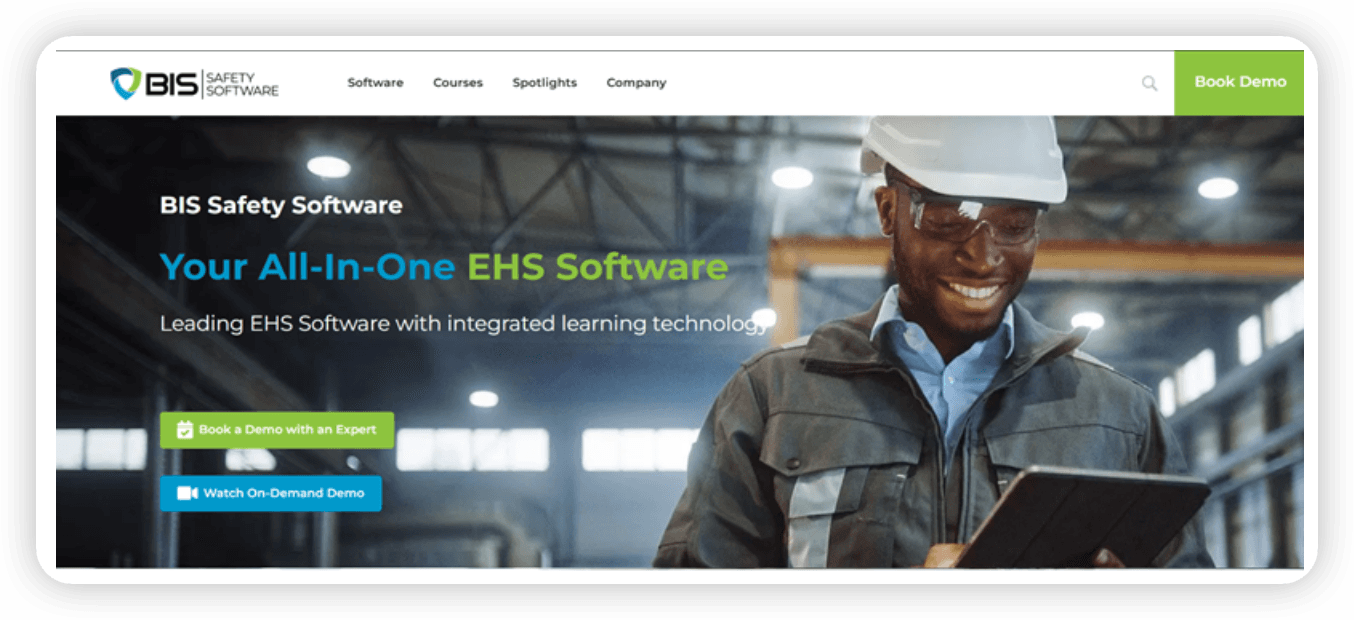
BIS Safety Software stands out as the best EHS software in 2026 because it brings training, compliance, field safety, records, forms, equipment, and reporting into one connected platform. Its all-in-one system is designed to help organizations streamline safety data management, inspections, incident tracking, compliance workflows, and field safety documentation. BIS is especially strong for high-risk industries such as mining, oil and gas, transportation, construction, manufacturing, and other sectors where workforce readiness and documentation accuracy are critical.
The platform includes tools for learning management, training records, digital safety forms, equipment management, training matrices, online orientations, incident management, COR audits, toolbox talks, pre-trip inspections, hazard assessments, competency assessments, and lone worker workflows. With AI-powered capabilities that help accelerate workforce readiness, simplify digital field execution, and strengthen compliance reporting, BIS Safety Software is a strong fit for organizations that need practical, scalable EHS management rather than a narrow point solution.
2. Sphera
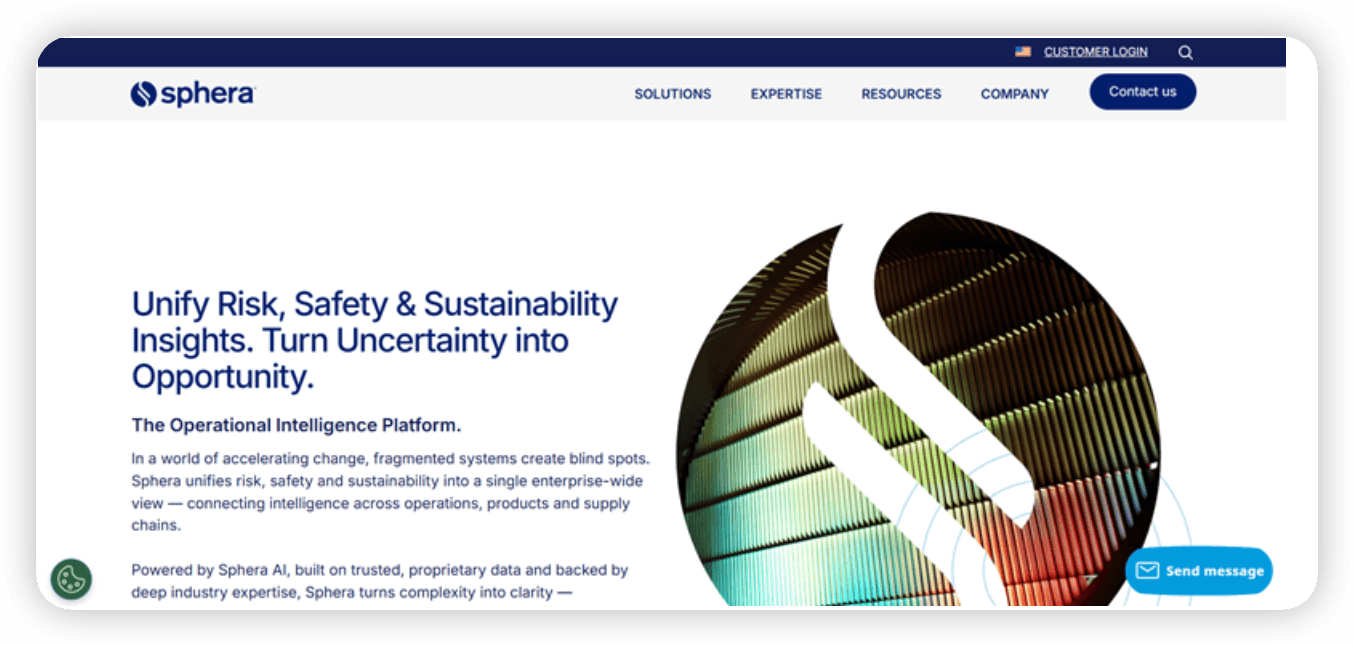
Sphera is a leading enterprise EHS and sustainability platform for organizations that need broad environmental, health, safety, and sustainability management across complex operations. Its system is designed to help companies operationalize compliance, health, safety, and sustainability programs through a configurable cloud-based interface built around established EHS best practices.
Sphera is particularly well suited for large multinational organizations with mature EHS programs, complex regulatory environments, and advanced sustainability reporting needs. Key strengths include enterprise risk visibility, environmental performance tracking, operational risk management, and sustainability integration. For companies that need a sophisticated EHS and sustainability system with global scalability, Sphera is a strong choice. Its differentiator is depth: it goes beyond basic safety management and supports organizations that need to connect EHS, ESG, product stewardship, and operational performance at scale.
3. EHS Insight
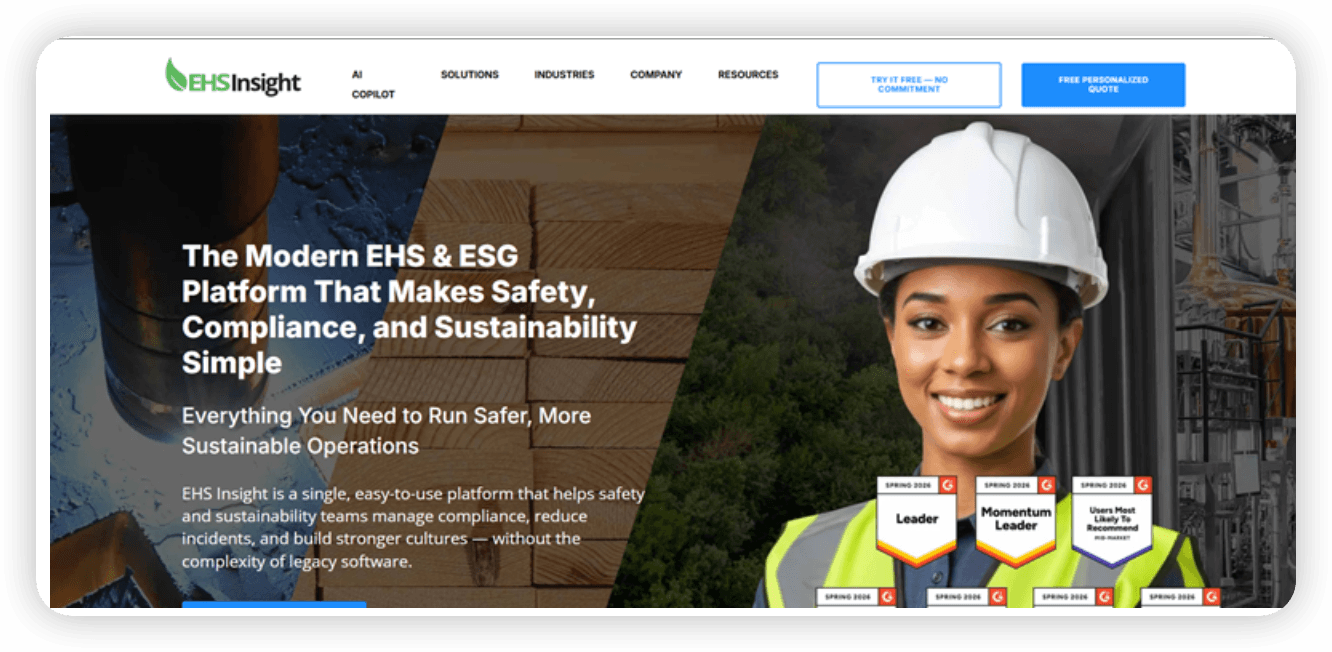
EHS Insight is a cloud-based EHS management system designed to help organizations manage incidents, audits, inspections, health and safety, and related EHS workflows. It is a strong option for companies that want a modular system with practical tools for safety teams, compliance officers, and operations leaders.
The platform is commonly associated with capabilities such as incident management, audit management, corrective actions, training tracking, compliance tasks, and environmental management. EHS Insight’s strengths include ease of access, centralized dashboards, and support for organizations with multiple worksites or distributed teams. It is well suited for midsized and larger businesses that need better oversight without immediately moving into a highly complex enterprise EHS implementation. For teams upgrading from spreadsheets or fragmented systems, EHS Insight offers a structured way to centralize safety activity and improve accountability.
4. VelocityEHS
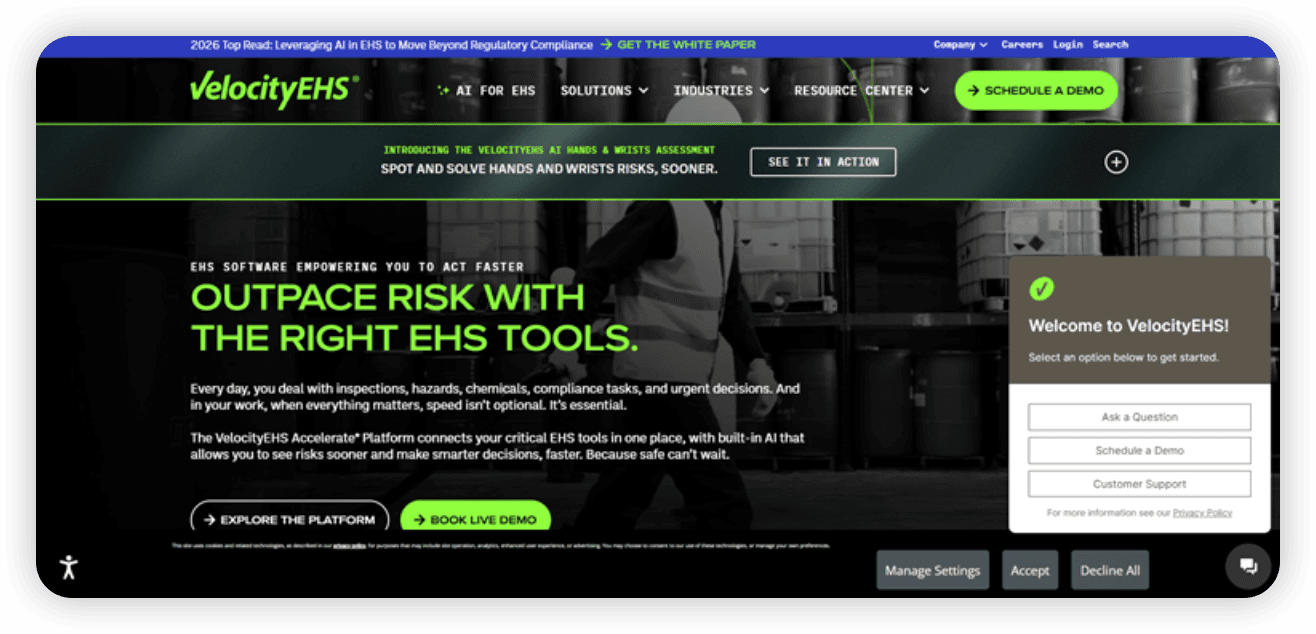
VelocityEHS is a well-established EHS platform with strong capabilities across safety, chemical management, contractor safety, operational risk, environmental compliance, ergonomics, training, and sustainability. Its platform focuses on reducing risk, improving safety visibility, and helping organizations manage workplace compliance more efficiently.
VelocityEHS is a strong fit for organizations that need broad EHS coverage, especially those managing chemical inventories, SDS compliance, environmental obligations, and multi-location safety programs. Its key differentiator is the breadth of its EHS and ESG solution set, which makes it valuable for companies seeking to consolidate several risk management functions into one ecosystem. The platform is particularly relevant for manufacturing, chemicals, healthcare, logistics, and other industries with complex compliance requirements. For organizations that need mature chemical management alongside traditional safety workflows, VelocityEHS remains a strong contender.
5. SafetyCulture
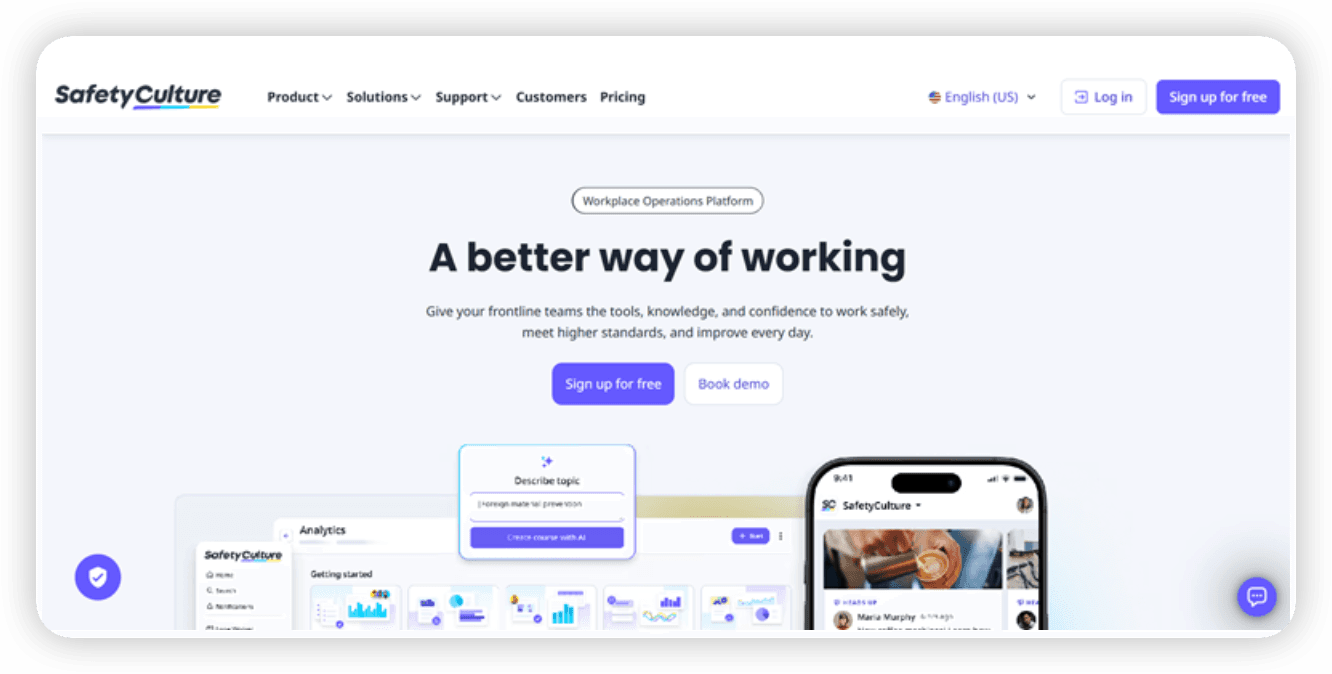
SafetyCulture is best known as a mobile-first operations and inspection platform. It is widely used for digitizing inspections, audits, checklists, issue reporting, and corrective actions. The platform helps organizations enhance safety standards and drive continuous improvement across operations.
SafetyCulture is especially useful for field-heavy teams that need quick adoption, mobile access, customizable checklists, and real-time visibility into frontline activity. Its strength is usability: teams can replace paper checklists with digital inspections and collect structured safety data from smartphones or tablets. It is a strong fit for construction, facilities management, hospitality, retail, manufacturing, logistics, and other distributed work environments. While it may not be the deepest enterprise EHS system for every compliance function, it is highly effective for organizations that want to improve inspection consistency, field reporting, and operational follow-through.
6. Cority
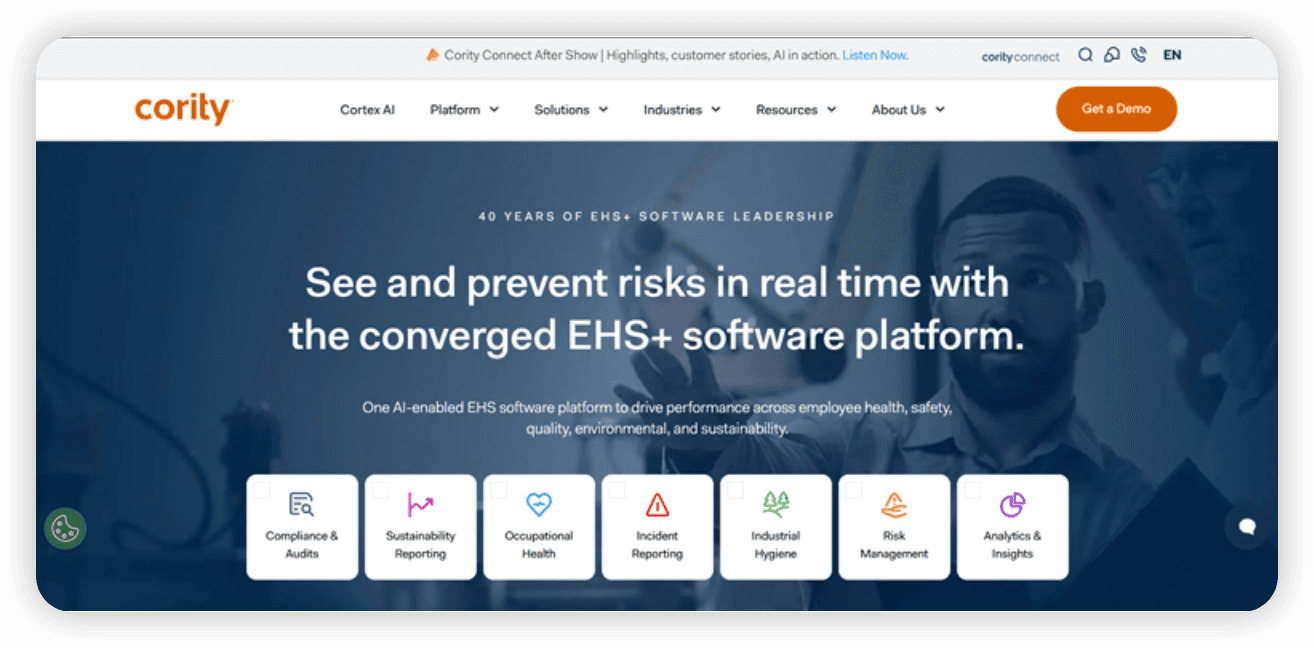
Cority is an enterprise EHS software platform focused on unifying compliance, safety, occupational health, and ESG performance. It is a strong choice for large and mid-sized organizations with complex health, safety, environmental, sustainability, and occupational health requirements.
Its strengths include data collection, EHS analytics, workflow management, compliance support, and enterprise reporting. Cority helps organizations centralize and analyze EHS-related data, manage regulatory concerns, reduce workplace accident risk, and support sustainability goals. It is particularly relevant for healthcare, energy, automotive, manufacturing, and other industries with mature compliance programs. Its differentiator is enterprise-level structure, making it a strong option for organizations that need broad EHS governance and decision support across multiple business units.
7. SiteDocs
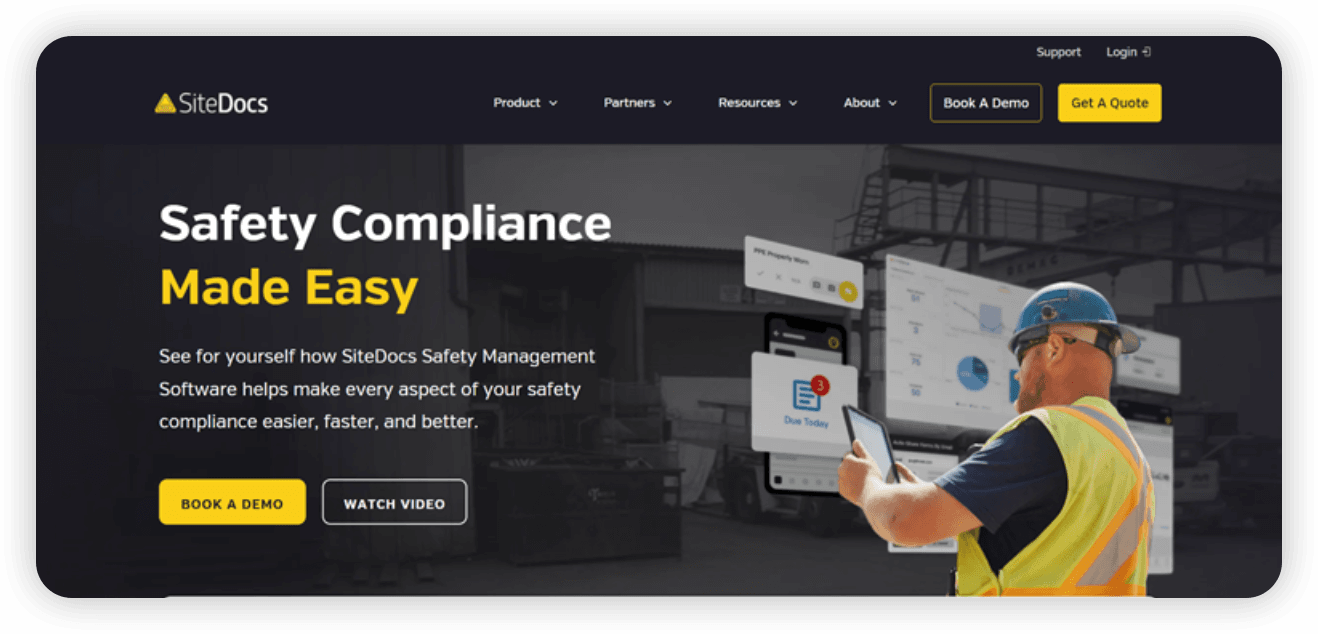
SiteDocs is a mobile-first safety management platform that helps teams manage safety compliance from the field and the office. Its feature set includes tools to build forms, monitor compliance, and manage certifications.
SiteDocs is especially strong for contractors and field-based organizations that need workers and supervisors to complete safety documentation quickly from mobile devices. Common use cases include inspections, hazard reports, incident reports, certification tracking, and safety document management. SiteDocs’ differentiator is its focus on ease of use and field adoption. It is well suited for construction, trades, energy services, utilities, and other organizations where safety paperwork needs to be completed on site rather than at a desk. For businesses replacing paper forms and binders, SiteDocs provides a practical way to increase documentation consistency and improve visibility for safety managers.
8. Intelex.com
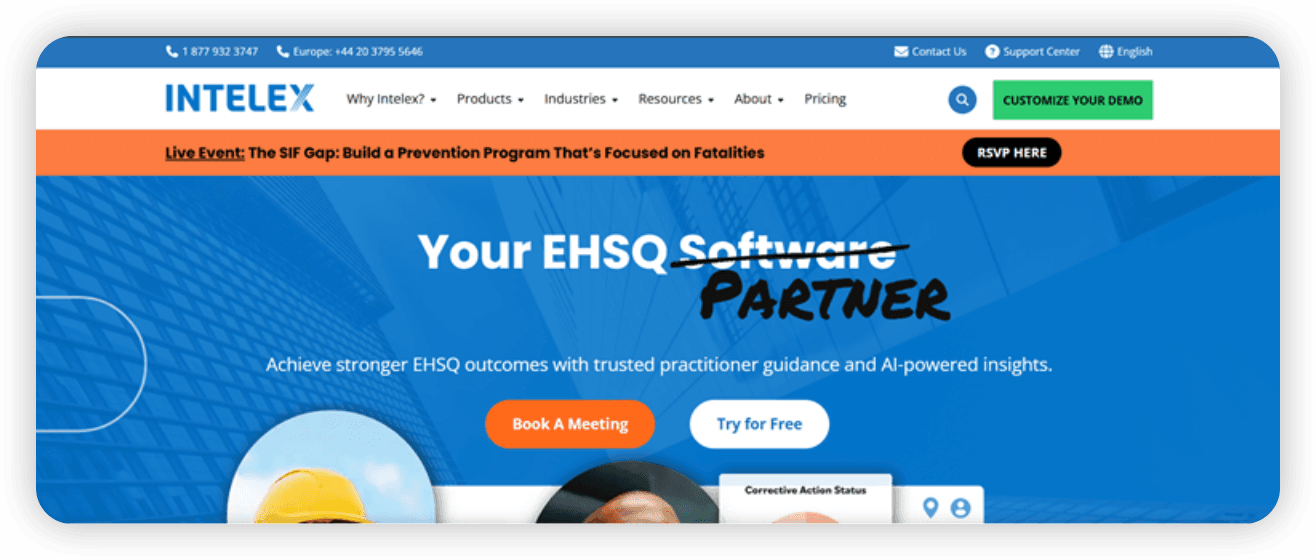
Intelex is an EHSQ platform designed to help organizations manage environmental, health, safety, quality, and business performance programs. It is a cloud-based solution used for reporting business information, supporting compliance, managing risks, and improving operational performance.
Intelex is a strong fit for organizations that want to connect EHS with quality management, document control, audits, inspections, corrective and preventive actions, and reporting. Its differentiator is the combination of EHS and quality management in a configurable system that can support complex organizational needs. Intelex is often relevant for manufacturers, energy companies, utilities, construction firms, and other businesses with layered compliance obligations. For companies that want EHS data to support broader operational excellence, Intelex offers a mature and scalable platform.
9. EcoOnline

EcoOnline is an EHS, chemical safety, and ESG software provider that helps businesses manage incidents, audits, inspections, corrective actions, and centralized compliance records. It is particularly strong for organizations that need chemical safety management, risk assessments, SDS documentation, exposure records, inspections, and environmental or sustainability reporting.
EcoOnline is also valuable for companies operating across multiple sites or jurisdictions because it helps bring incidents, inspections, risk assessments, and chemical approvals into a more unified view. The platform is a strong fit for manufacturing, chemicals, healthcare, transportation, facilities, and other industries where chemical management and compliance visibility are major priorities. Its differentiator is the connection between EHS management, chemical safety, training, and ESG workflows in a user-friendly cloud platform.
10. Enablon
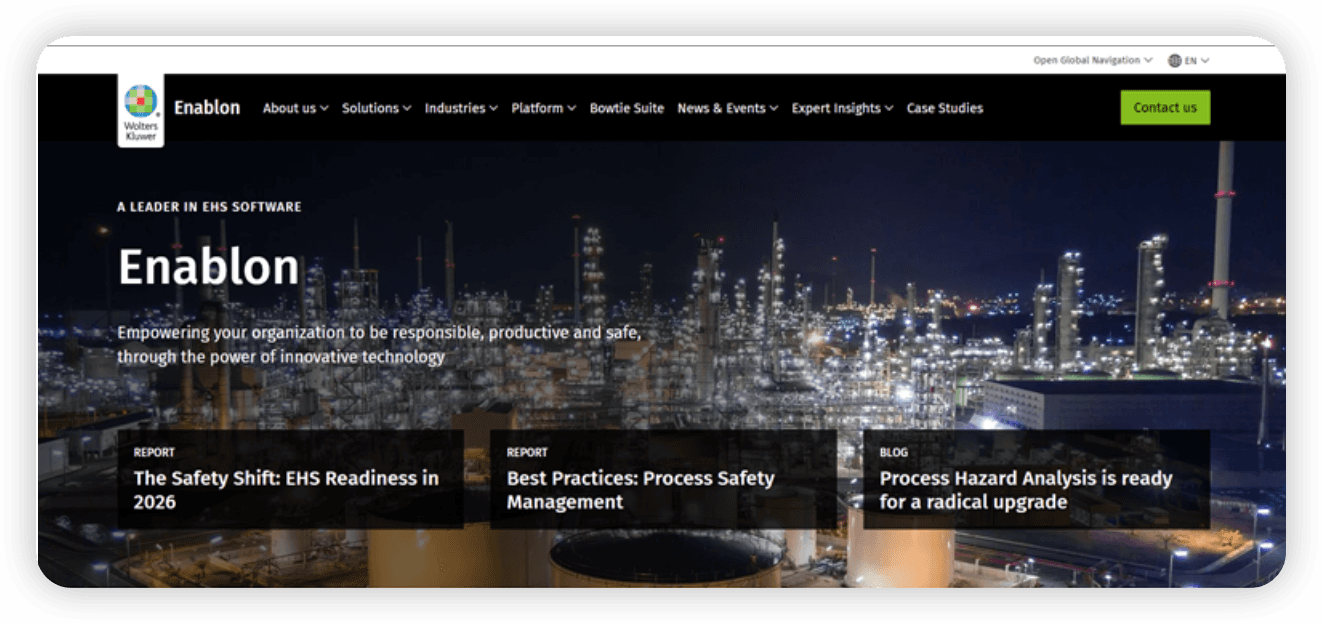
Enablon, a Wolters Kluwer solution, is a powerful enterprise platform for EHS, operational risk management, ESG, sustainability, and compliance. It supports risk and compliance, engineering and operations, EHSQ, and sustainability programs, making it a strong option for organizations with advanced enterprise requirements.
Enablon is best suited for large enterprises with complex global operations, extensive regulatory requirements, and advanced reporting needs. Its strengths include EHS performance management, ESG reporting, operational risk, compliance workflows, and enterprise data integration. The platform is especially relevant for energy, chemicals, manufacturing, utilities, and multinational organizations that need mature governance across EHS and sustainability. Enablon’s differentiator is enterprise depth and configurability, making it a strong option for organizations that need a robust, global system rather than a lightweight safety tool.
Conclusion
Choosing the right EHS software in 2026 matters because safety, compliance, training, and operational risk are too important to manage through disconnected systems. The best platform should reduce administrative burden, improve field visibility, strengthen documentation, and help leaders act before small issues become major incidents.
Each solution on this list has clear strengths. Sphera and Enablon excel in enterprise EHS and sustainability. SafetyCulture and SiteDocs are strong for field adoption. VelocityEHS, Cority, EHS Insight, Intelex, and EcoOnline offer valuable capabilities for specialized EHS needs. However, BIS Safety Software earns the top position because it combines all-in-one EHS management, workforce training, digital forms, compliance records, AI-powered features, and practical tools for high-risk industries in one connected platform.
Frequently Asked Questions
What is EHS Software?
EHS software is a digital system used to manage environmental, health, and safety programs. It helps organizations track incidents, inspections, audits, training, corrective actions, risk assessments, compliance documents, and safety performance.
Who uses EHS Software?
EHS software is used by safety managers, HR teams, operations leaders, compliance officers, supervisors, field workers, contractors, and executives. It is especially valuable in industries such as construction, mining, oil and gas, transportation, manufacturing, utilities, and healthcare.
Why should we use EHS Software?
Organizations use EHS software to reduce manual paperwork, improve compliance, centralize safety data, track training and certifications, identify risks faster, and create stronger accountability across the workplace. In high-risk industries, it can also help prevent incidents, reduce downtime, and support a stronger safety culture.