
|5.025Mins Read
How Smart Cities Are Using License Plate Reader Software
- Authors

- Name
- Geeks Kai
- @KaiGeeks
Most cities today are dealing with the same growing problem: more vehicles, limited road capacity, and increasing safety risks. Traffic congestion alone costs urban economies billions each year, while vehicle-related crimes continue to challenge law enforcement.
According to the INRIX Global Traffic Scorecard, drivers in major cities lose 50 to 100 hours annually due to congestion. At the same time, the National Insurance Crime Bureau reports hundreds of thousands of vehicle theft cases each year in the U.S. alone.
Traditional surveillance systems are no longer enough to handle this scale.
This is why smart cities are turning to license plate reader software (LPR)—a technology that uses AI to automatically detect, read, and analyze vehicle license plates in real time. It’s not just about monitoring anymore. It’s about making faster decisions, improving safety, and managing cities more efficiently.
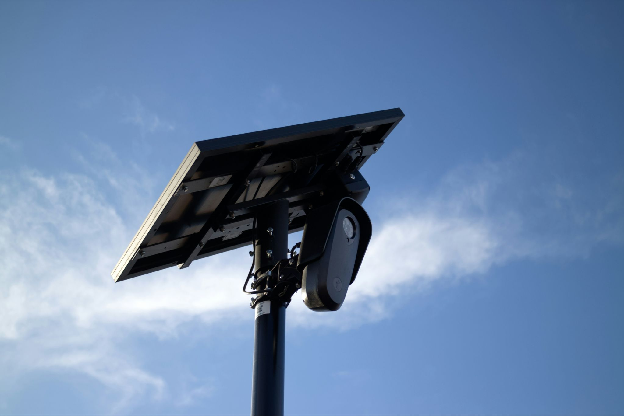 Image source
License plate reader software uses computer vision and optical character recognition (OCR) to identify and extract license plate numbers from images or video footage.
Here’s how it works in simple terms:
Modern systems can achieve over 95% accuracy in controlled conditions, making them reliable for large-scale deployments.
What makes today’s systems different is speed. Instead of reviewing hours of footage manually, operators can find specific vehicles in seconds.
Traffic congestion is one of the biggest urban challenges.
License plate reader software helps cities:
Cities like London and Singapore have used similar systems to reduce congestion by up to 15–20% in certain zones. By analyzing vehicle movement patterns, authorities can make smarter infrastructure decisions.
One of the most powerful uses of LPR technology is in public safety.
Law enforcement agencies use it to:
Instead of relying only on patrol units, officers receive real-time alerts when a vehicle of interest is detected. This significantly improves response time.
Modern systems are also becoming more efficient. Many now work with existing camera infrastructure rather than requiring new installations. For example, platforms like Coram’s license plate reader software are designed to integrate with IP cameras already deployed across a city. These systems can scan plates across multiple feeds, allow searches using partial plate numbers, and send instant alerts when a flagged vehicle appears.
This kind of capability reduces investigation time from hours to seconds, which is critical in active cases.
Parking is another area where LPR systems are making a big impact.
Cities and private operators use LPR for:
According to municipal reports, automated parking enforcement systems can reduce operational costs by up to 30% while improving compliance.
For drivers, it also means less friction—no tickets, no barriers, and faster entry/exit.
Traditional toll booths are being replaced by open-road tolling systems powered by license plate recognition.
Benefits include:
In some high-traffic areas, electronic tolling has reduced wait times by up to 70%, improving overall traffic flow.
License plate reader software is also widely used for vehicle access control.
Examples include:
Instead of physical passes or guards manually checking vehicles, access is granted automatically based on recognized license plates.
This improves both security and convenience.
Beyond real-time monitoring, LPR systems generate valuable data.
Cities can analyze:
This data helps urban planners make better decisions about road expansions, public transport, and traffic policies.
Real-time alerts allow authorities to act immediately instead of reacting later.
Automation reduces reliance on manual monitoring and enforcement.
Quick identification of vehicles helps prevent crime and improve investigations.
Modern systems can integrate with existing cameras, reducing infrastructure costs.
As with any surveillance technology, privacy is a major concern.
Most cities address this by:
Importantly, many systems focus on vehicle data rather than personal identity, reducing privacy risks.
What is license plate reader software used for? It is used for traffic monitoring, law enforcement, parking automation, and access control.
Is license plate recognition accurate? Most modern systems achieve over 90–95% accuracy under good conditions.
Do LPR systems invade privacy? They are regulated and typically focus on vehicle data, not personal identity.
Can cities use existing cameras for LPR? Yes, many modern solutions integrate with existing IP cameras.
How does LPR improve safety? It enables real-time detection of suspicious or stolen vehicles, allowing faster response.
License plate reader software is becoming a core technology in smart cities. It helps governments move from reactive systems to proactive, data-driven operations.
From reducing traffic congestion to improving public safety, the impact is clear. Cities can operate more efficiently, respond faster, and make better decisions using real-time insights.
As urban populations continue to grow, technologies like LPR will play an even bigger role in shaping how cities function.
The key challenge moving forward is balance—using powerful surveillance tools responsibly while maintaining public trust.